Anthropic Raises $65 Billion and Briefly Becomes the Highest-Valued AI Lab
On May 28, Anthropic announced a $65 billion Series H round at a $965 billion post-money valuation, a staggering number even by 2026 AI standards. The company said its run-rate revenue had already crossed $47 billion earlier in the month and that the new capital would go toward safety research, interpretability work, more compute, and scaling the Claude products and partnerships customers now rely on. More than almost any single product launch, the round showed how quickly the market is turning frontier AI labs into infrastructure-scale businesses.
Claude Opus 4.8 Arrives With Better Judgment, Dynamic Workflows, and a Faster Mode
Also on May 28, Anthropic released Claude Opus 4.8, positioning it as a practical upgrade rather than a flashy reset. The company says it improves on Opus 4.7 across benchmarks, is more reliable on long agentic tasks, and launches at the same base price while adding new effort controls, dynamic workflows for large-scale Claude Code jobs, and a fast mode that runs at 2.5 times the speed. The message was clear: Anthropic is trying to make Claude feel less like a single model and more like a flexible work system.
OpenAI Launches Rosalind Biodefense and Turns Frontier Biology Into a Public-Sector Story
On May 29, OpenAI launched Rosalind Biodefense, expanding trusted access to GPT-Rosalind for vetted developers and government partners working on biodefense, public health, and pandemic preparedness. OpenAI framed the move as part of a broader effort to make sure the institutions responsible for detecting and responding to biological threats have access to frontier tools too, not just private labs or commercial drug companies. It was one of the clearest signs this week that advanced biology models are becoming a policy and resilience story, not only a research one.
OpenAI Spends the Week Turning Frontier Safety Into a Governance Stack
OpenAI used May 28 and May 29 to publish two closely linked safety efforts: its Frontier Governance Framework and a separate playbook for trustworthy third-party evaluations. Together, the documents argue that frontier-model oversight can no longer be treated like a simple chatbot test. OpenAI says the strongest systems now depend heavily on tools, environments, and workflow setup, and that real outside evaluation has to account for all of that. The broader implication is that frontier AI governance is slowly becoming more concrete, more procedural, and more legible to regulators and enterprise buyers.
DeepSeek Makes Its 75% V4-Pro Price Cut Permanent
On May 23, Reuters reported that DeepSeek would make its 75% price cut on V4-Pro permanent, keeping prices at a quarter of their original level. The company also slashed API costs to between 0.025 and 6 yuan per million tokens depending on usage type, down from 0.1 to 24 yuan before. That matters because the pricing move is not just a promotion anymore; it is a structural shot in the ongoing race to commoditize high-end inference and put more pressure on both Chinese and Western labs to justify premium pricing.
Huawei Bets on a New Chip Principle to Work Around U.S. Sanctions
On May 29, Reuters reported that Huawei was pushing a new chip-design principle centered on boosting transmission speed rather than continuing to shrink transistors. Supporters see it as a possible path for China to keep building more advanced chips despite U.S. sanctions, while skeptics say the real test will be whether Huawei can turn the idea into commercial products and design tools at scale. Either way, the story captured a bigger truth about 2026 AI: the frontier race is now just as much about alternative chipmaking paths as it is about model releases.
Pope Leo Tells the World to Slow Down on AI and Anthropic Helps Carry the Message
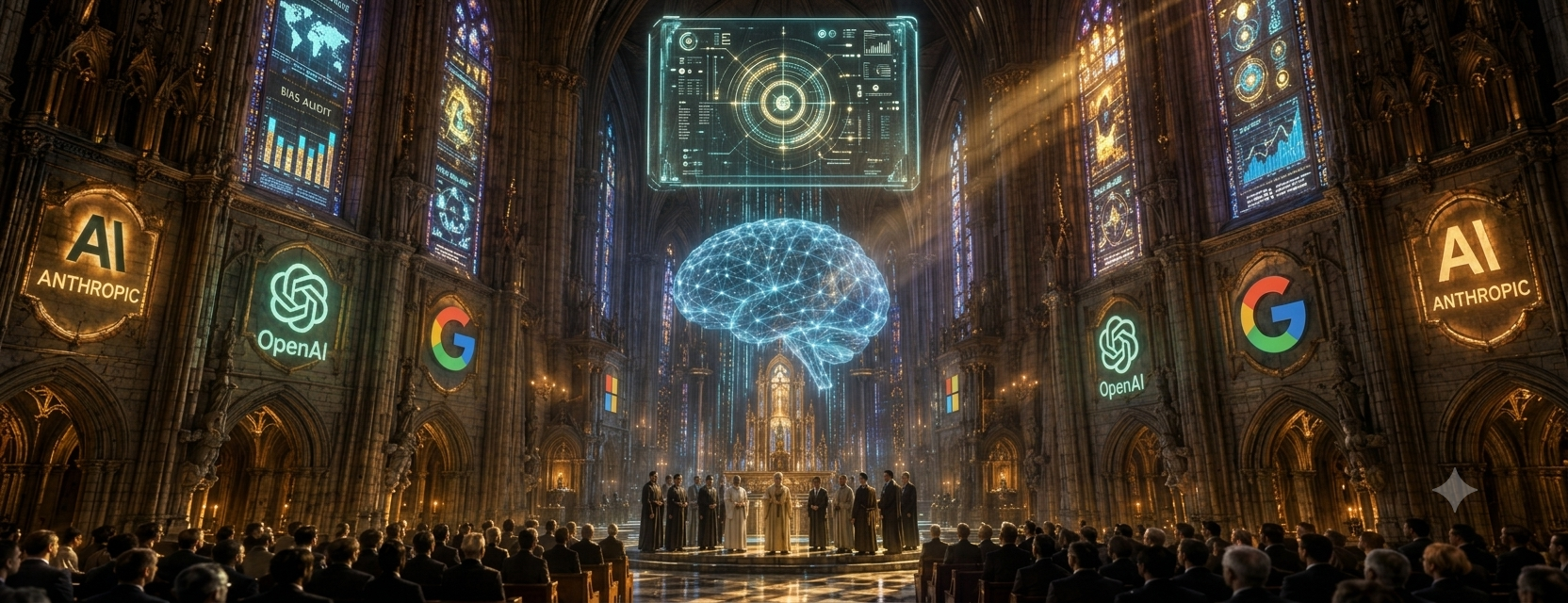
On May 25, Pope Leo used his first major manifesto to warn that AI systems could spread misinformation, intensify conflict, and place some weapons beyond meaningful human control. He also called on governments to slow development and regulate the technology more closely. The same day, Anthropic published remarks from co-founder Chris Olah, who had been invited to the Vatican presentation. The result was one of the week’s clearest signs that the AI debate is moving beyond Silicon Valley and into moral, religious, and civilizational arguments about how fast this technology should advance.