OpenAI Turns Cyber Defense Into a Full Product and Partner Stack
On June 22, OpenAI expanded Daybreak into a broader security push built around patch automation rather than just vulnerability discovery. The release combined an updated Codex Security plugin, the full limited release of GPT-5.5-Cyber, a new Daybreak Cyber Partner Program, and Patch the Planet, an open-source initiative with Trail of Bits, HackerOne, and Calif, signaling that OpenAI wants to be deeply embedded in defensive cyber workflows instead of merely supplying a model.
Samsung’s Global ChatGPT Rollout Shows Enterprise AI Is Moving Into Industrial Giants
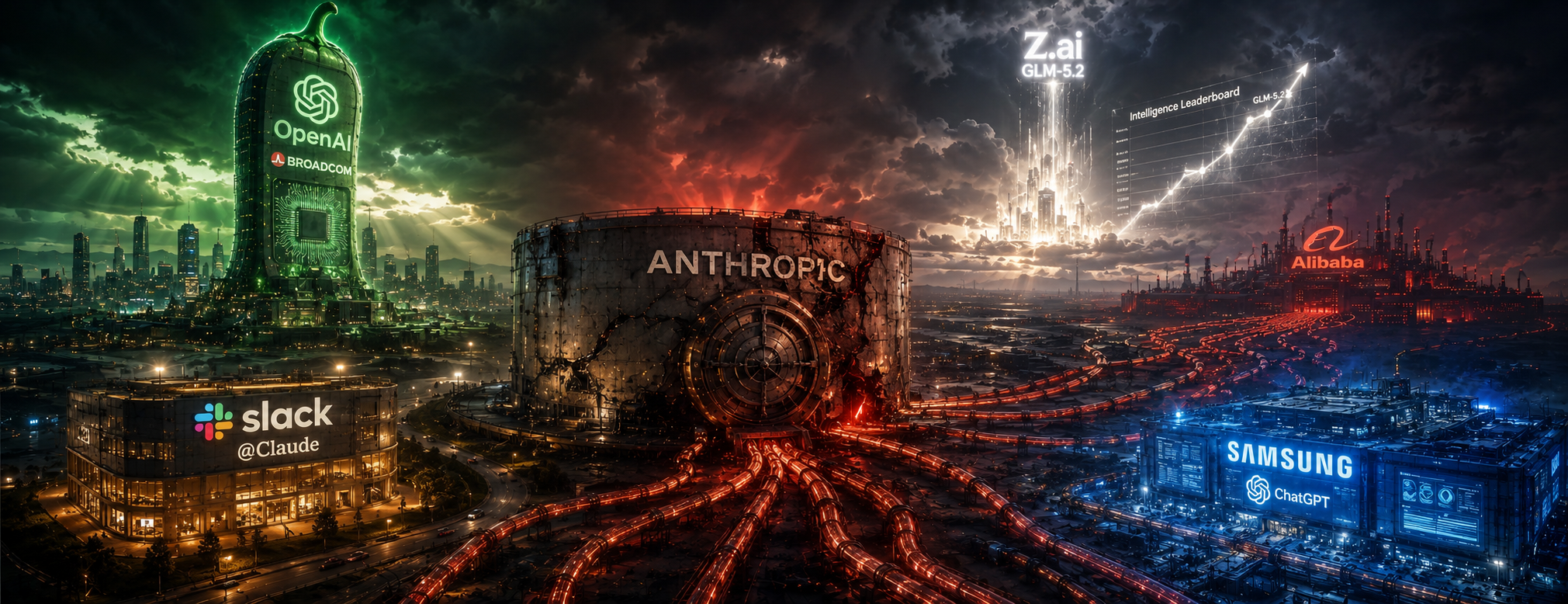
On June 21, OpenAI said Samsung Electronics would deploy ChatGPT Enterprise and Codex to all Samsung employees in Korea and to all employees worldwide in its Device eXperience division. OpenAI called it one of its largest enterprise launches to date, and Samsung says it plans to use the tools across functions from research and development and manufacturing to marketing and corporate operations.
Anthropic Brings Claude Into Slack Threads Like a Real Teammate
On June 23, Anthropic launched Claude Tag, a new Slack-based way for teams to summon Claude into group chats simply by typing @Claude. The tool is available in beta for Claude Enterprise and Team customers, can retain context over time, break tasks into stages, and proactively surface relevant updates, making it one of Anthropic’s clearest efforts yet to position Claude as an always-on coworker rather than just a chatbot.
OpenAI Unveils Jalapeño and Makes Its Chip Ambitions Concrete
On June 24, OpenAI and Broadcom unveiled Jalapeño, OpenAI’s first custom inference chip and the first step in a multi-generation hardware plan aimed at reducing dependence on outside accelerators. Reuters reported that Broadcom’s chief executive said the chip matches Nvidia’s Blackwell and Google’s TPUs, while OpenAI said Jalapeño is already running GPT-5.3-Codex-Spark workloads in its labs and is expected to be deployed by the end of this year.
Anthropic Accuses Alibaba of the Largest Known Claude Distillation Attack
Also on June 24, Reuters reported that Anthropic accused Alibaba of illicitly extracting Claude’s capabilities through what it described as the largest known attack of its kind on the company. Anthropic said the campaign generated more than 28.8 million exchanges through nearly 25,000 fraudulent accounts between April 22 and June 5, showing how model distillation, intellectual-property protection, and U.S.-China AI tensions are becoming increasingly entangled.
Washington Turns Up Pressure on Meta to Join Frontier-Model Reviews
On June 23, Reuters reported that the Trump administration was pressing Meta to voluntarily submit its frontier AI models for government review, a step several rival labs had already accepted. If completed, the arrangement would give U.S. officials a chance to examine capabilities and vulnerabilities before release, underscoring how national-security oversight is becoming a bigger part of the frontier-model race.
China’s Z.ai Uses Anthropic’s Shutdown Moment to Narrow the Frontier Gap
On June 25, Reuters reported that Chinese startup Z.ai had vaulted into the spotlight after releasing GLM-5.2 one day after Anthropic disabled global access to its most advanced models. According to Reuters, the model now ranks fourth on Artificial Analysis’ leaderboard and second on Code Arena’s front-end coding leaderboard while operating at roughly one-sixth the cost of leading closed U.S. systems, highlighting how export controls and product restrictions can also create openings for fast-moving open-source competitors.